LinkedIn • Follower growth
Igniting follower growth for companies


Overview
LinkedIn, as a professional network, enables members to connect and grow their careers, but it faced a critical challenge: the platform struggled to surface valuable content from company Pages, especially those with fewer than 500 followers. Members wanted relevant content, but many companies and creators lacked visibility. This gap affected engagement, growth, and the overall health of LinkedIn’s community-building efforts.
My role
To ignite the follow ecosystem, I facilitated workshops to establish the product's vision, roadmap, and milestones, led the design and iteration of pages initiatives, fostered collaboration between three teams (growth, content experience, and feed) to drive the adoption.
Impact
The redesigned PayPal checkout successfully met key objectives and delivered significant value while improving the user experience, enabling business growth and strengthening PayPal's competitive stance:
Increase in company page followers
All our experiments yielded a 6% increase in company page followers
A balanced ecosystem that accounts for SMBs
The increase in followers was mostly for small companies
Increase in engagement
12,000 monthly subscriptions to company pages guaranteeing repeated visits.
Challenge
LinkedIn, a platform designed to foster professional connections and economic opportunities, faced a challenge in its mission to create vibrant communities. While the platform excelled at connecting professionals and facilitating job searches, it struggled to surface meaningful content created by Company Pages, and facilitate follower growth, especially for those with less than 500 followers.
Two teams, Pages and Profile, aimed to improve the "follow" ecosystem. I led research and and data analysis, including a 400-person survey to gain insights to address the challenges, finding the following root causes:
The rise of competitors emphasizing streamlined payment experiences necessitated a critical evaluation of our own checkout flow. Our existing architecture, housing over 30 features, had become dense. A significant portion of the interface was occupied by less critical information, inadvertently obscuring valuable features like PayPal Credit and new flexible payment options. This complexity hindered feature discovery and adoption.
Our challenge was to strategically simplify the information architecture, prioritizing key payment methods and integrating new capabilities intuitively for a broad user base, without disrupting established user behaviors tied to our high conversion rate.
Members valued content, not company names
Members followed companies organically in their feed, motivated by valuable content and conversations. They defined page relevance as "companies in my industry, interest and activity on LinkedIn."
Members follow pages to stay updated
The top reasons for following a page were to stay current in one's area of expertise, while unfollows were primarily due to career path alterations or page inactivity.
A recommendation gap
Algorithms struggled to recommend creators with limited followers, preventing them from gaining visibility and building their audience.
Strategy
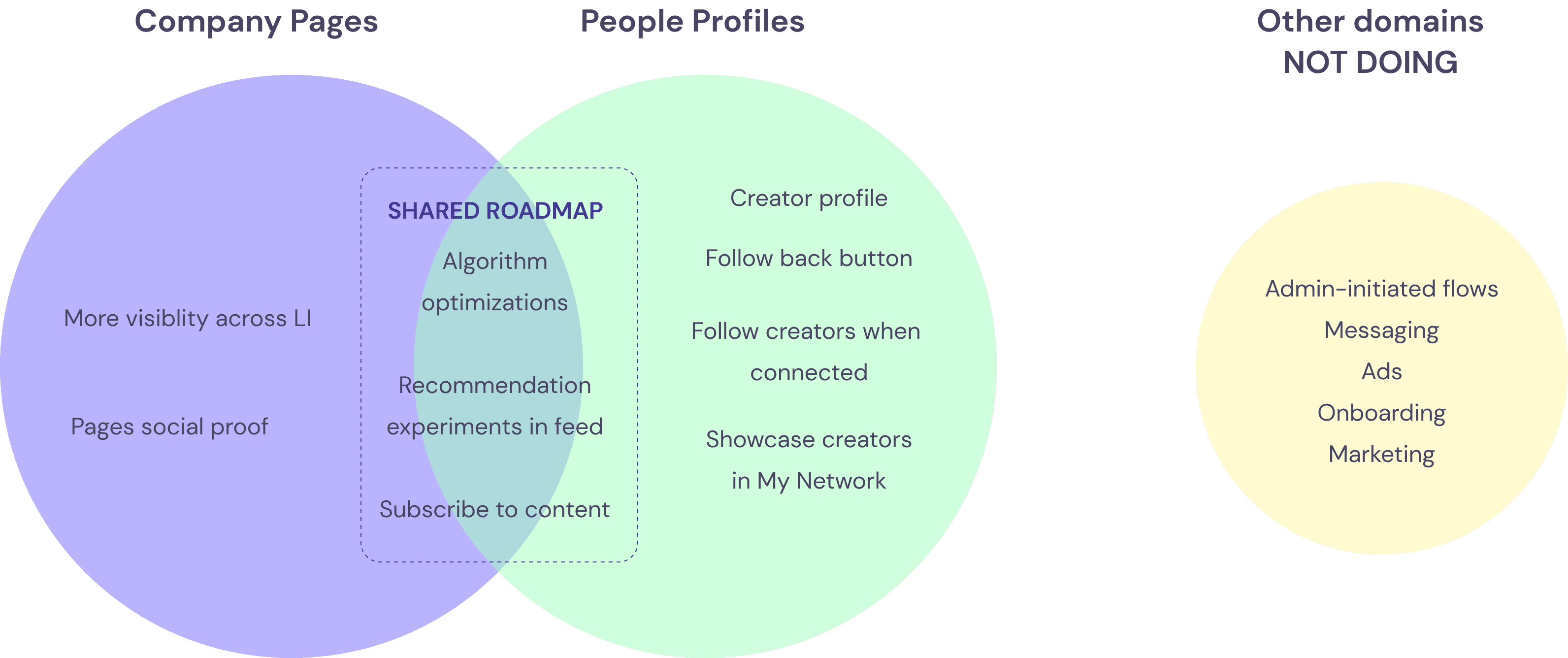
I organized a remote workshop with cross-functional teams, including People Profile, to align roadmaps and address shared pain points in the follow experience.
Due to their focus on Creator Profile, we agreed that I would lead initial follow explorations and involve them when needed. The diagram below shows topics for our joint roadmap Vs separate initiatives.
Recommendation quality
Enhance the UX of follow recommendations and related algorithms.
Pages visibility
expand the surfaces where follow recommendations were displayed, ensuring they were prominently featured across the platform
Engagement improvements
Create viral follow loops to help customers discover pages continuously
Content distribution
Distribute content from Pages and people in feeds, notifications and new capabilities like subscriptions.
Exploration and iteration
To execute strategic themes effectively, the team utilized a combination of advancements in AI, enhancements to the user interface, and the development of new features.
I established a regular working rhythm with the people profile team and ad-hoc collaborations with teams responsible for areas where Pages aimed to make an impact.
As projects evolved, I maintained a collection of experiments and initiatives in a visual roadmap, paired with a slack channel for questions and daily check-ins.
A visual roadmap helped the pages and people teams zoom in and out on intiviatives


Roadmap execution
Recommendation quality improvements
Hypotehesis
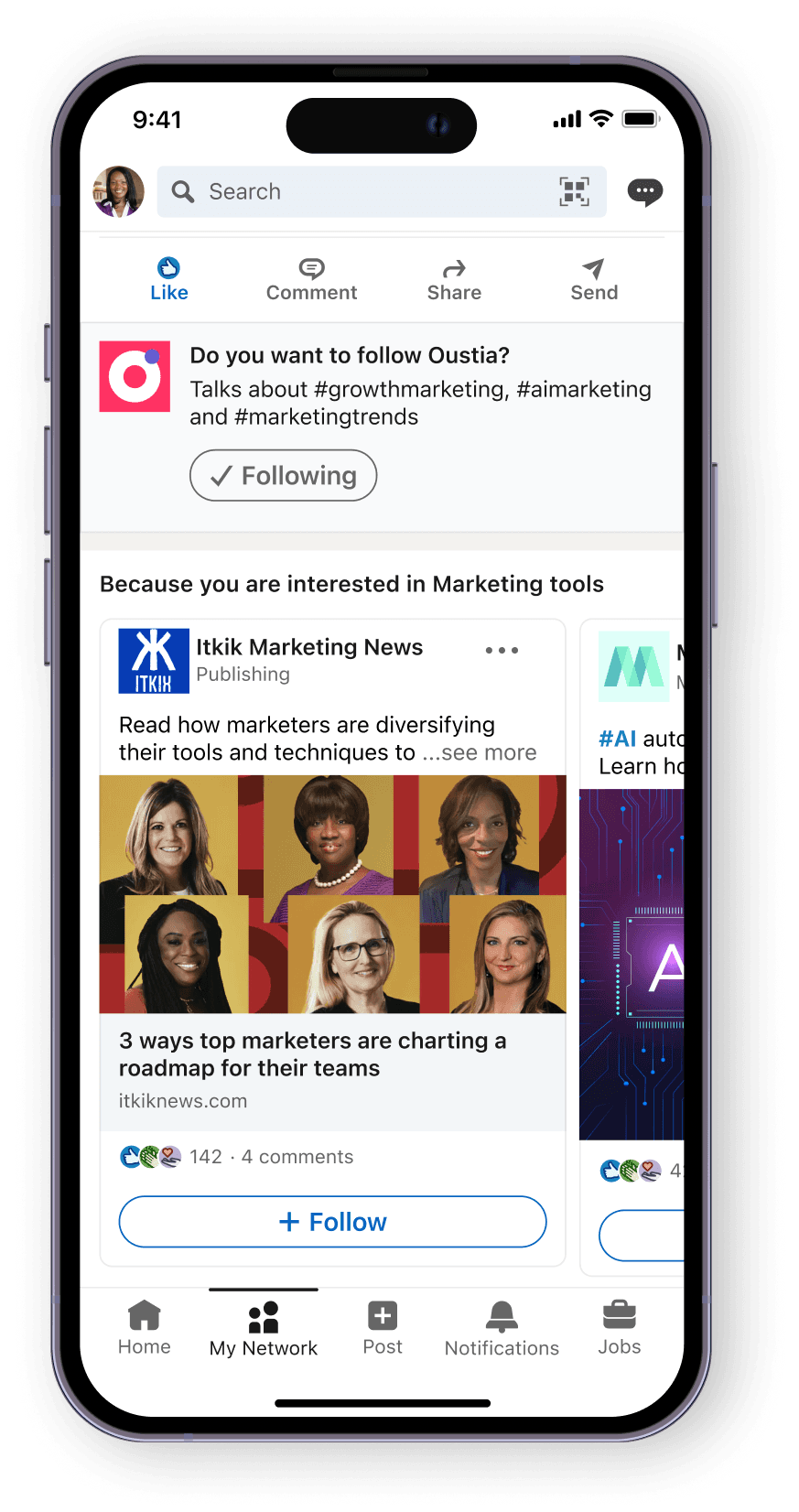
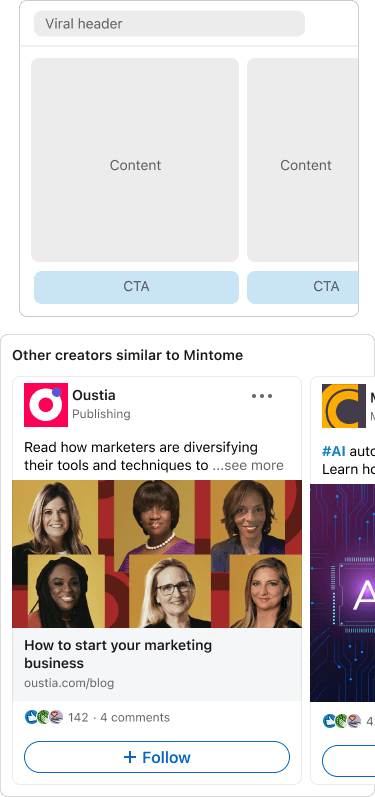
If we show [social proof / social proof + content snippets / content first] in follow recommendations, customers will be more likely to be interested and follow Page creators
Action
Ran 3 approaches through A/B tests to prove/disprove the hypothesis.
Impact
Variant C was the winner, with a 1.4% follower lift, and later implemented across all recommendations.
Experiment progression
Control: Recommendation module
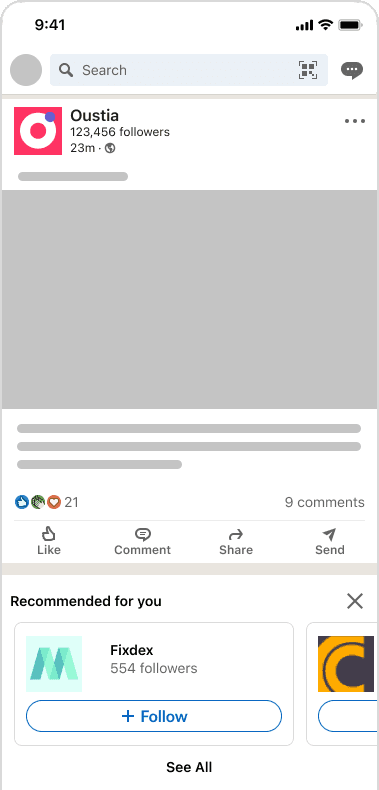


A) Social proof + content (0.5% lift)
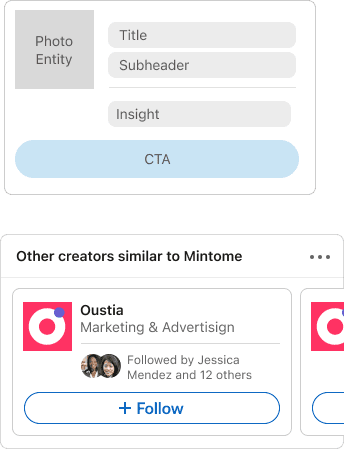
B) Content first (1.4 lift)


Trigger-based nudges
Hypotehesis
If we show [social proof / social proof + content snippets / content first] in follow recommendations, customers will be more likely to be interested and follow Page creators
Action
Ran 3 approaches through A/B tests to prove/disprove the hypothesis.
Impact
Variant C was the winner, with a 1.4% follower lift, and later implemented across all recommendations.
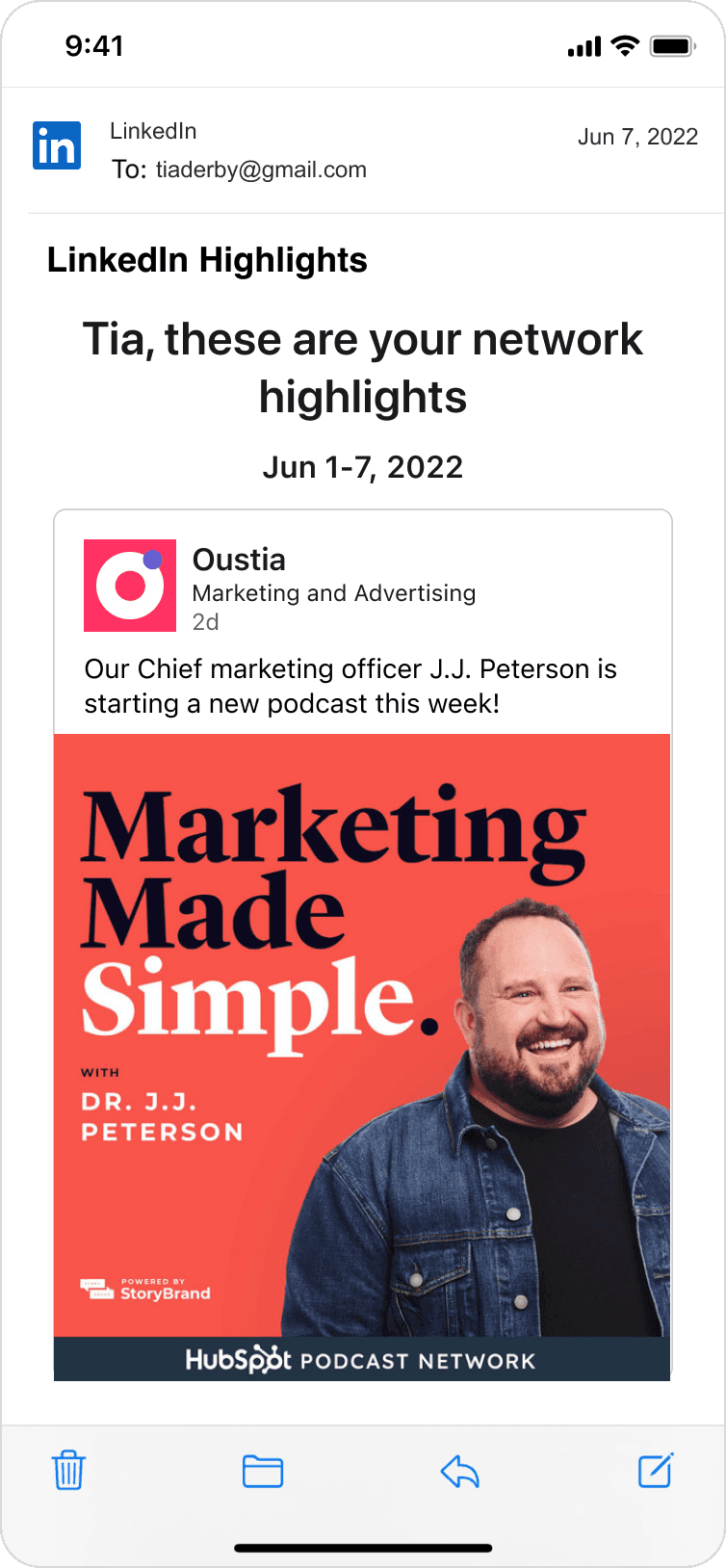
Follow nudge triggered by a reaction


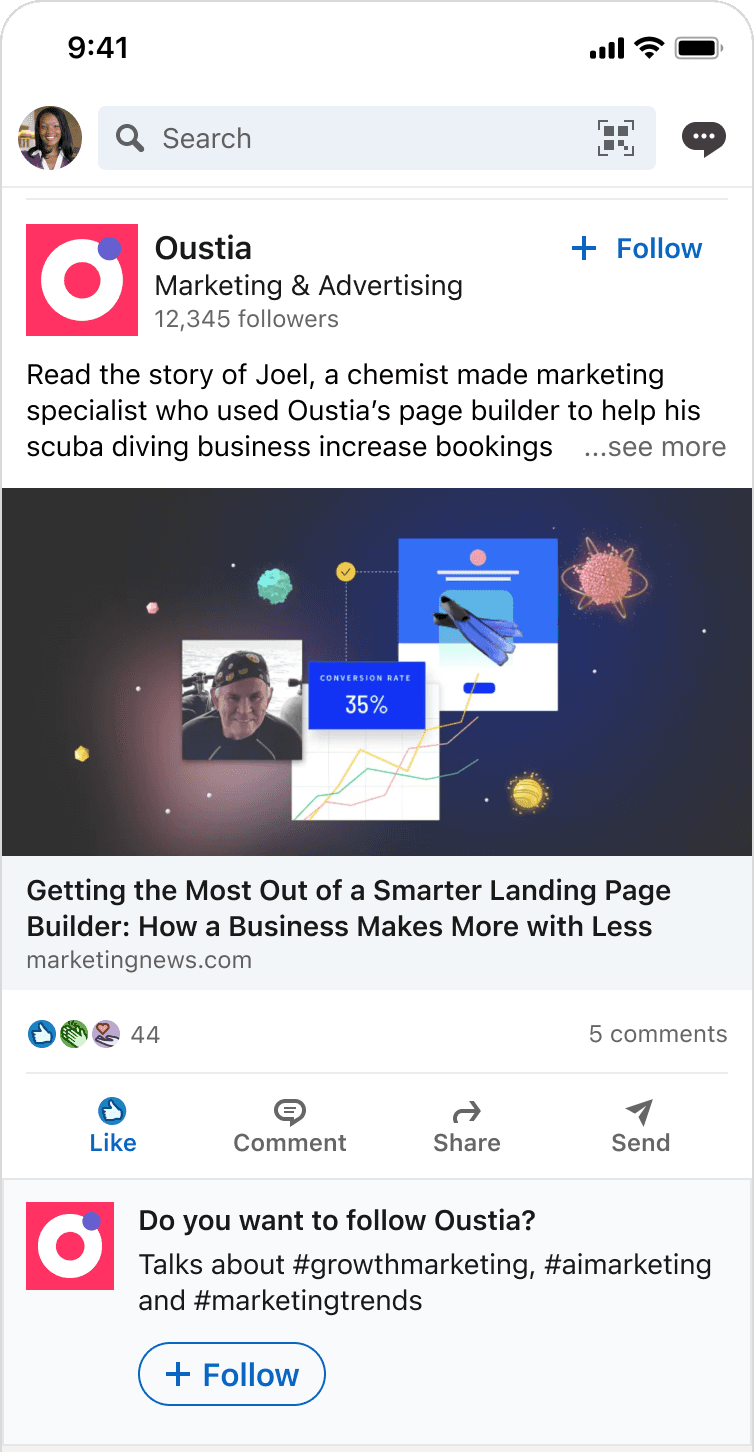
Discovery carousel triggered by a follow
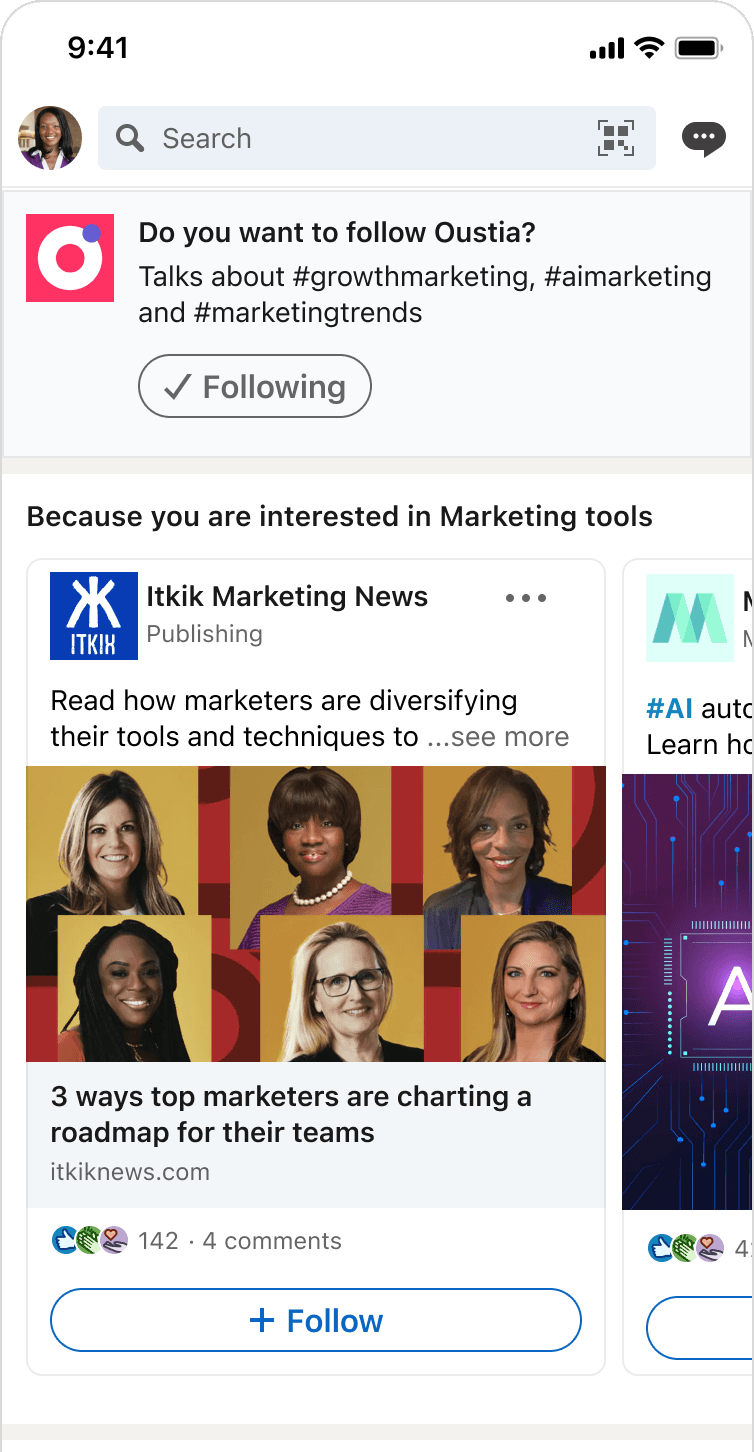


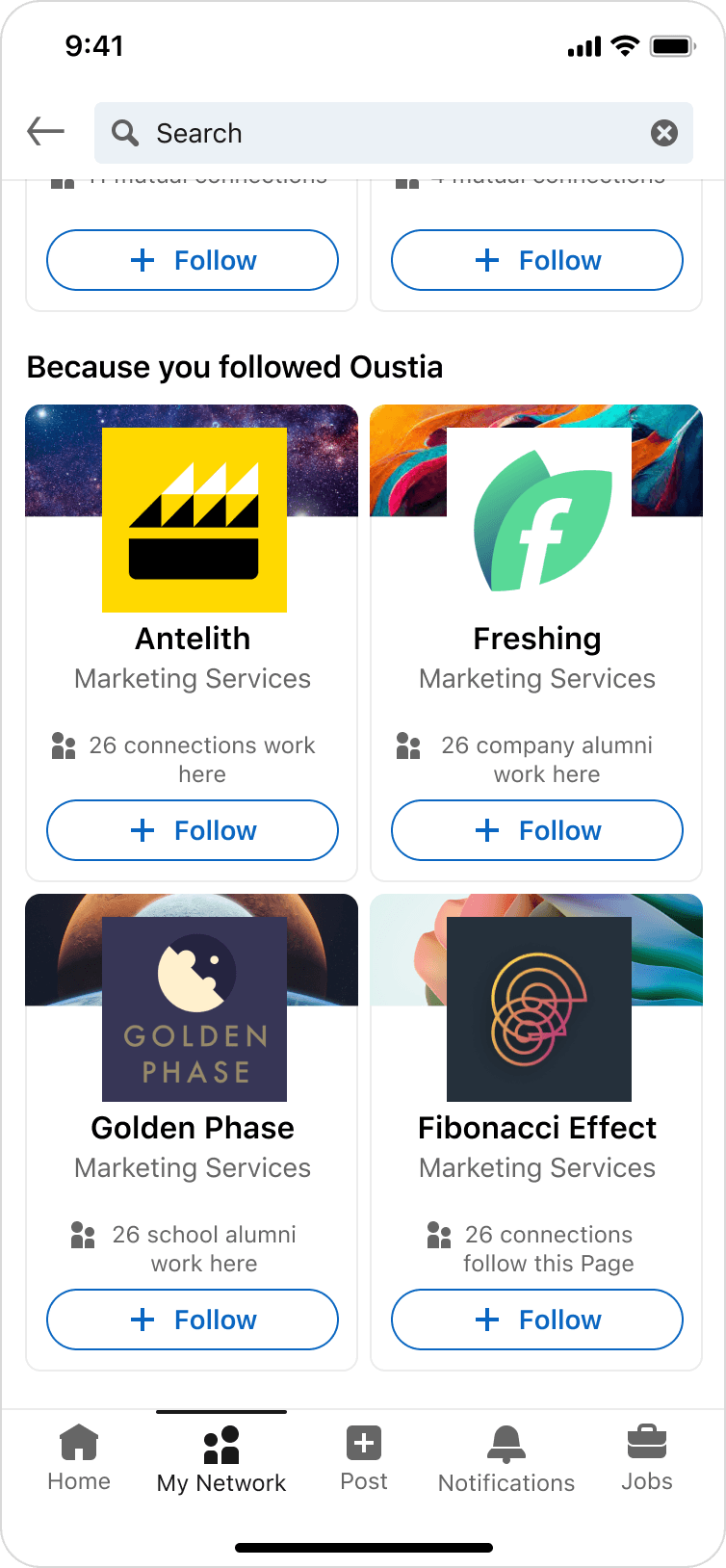
Social proof enrichment
Hypotehesis
If we show [social proof / social proof + content snippets / content first] in follow recommendations, customers will be more likely to be interested and follow Page creators
Action
Ran 3 approaches through A/B tests to prove/disprove the hypothesis.
Impact
Variant C was the winner, with a 1.4% follower lift, and later implemented across all recommendations.


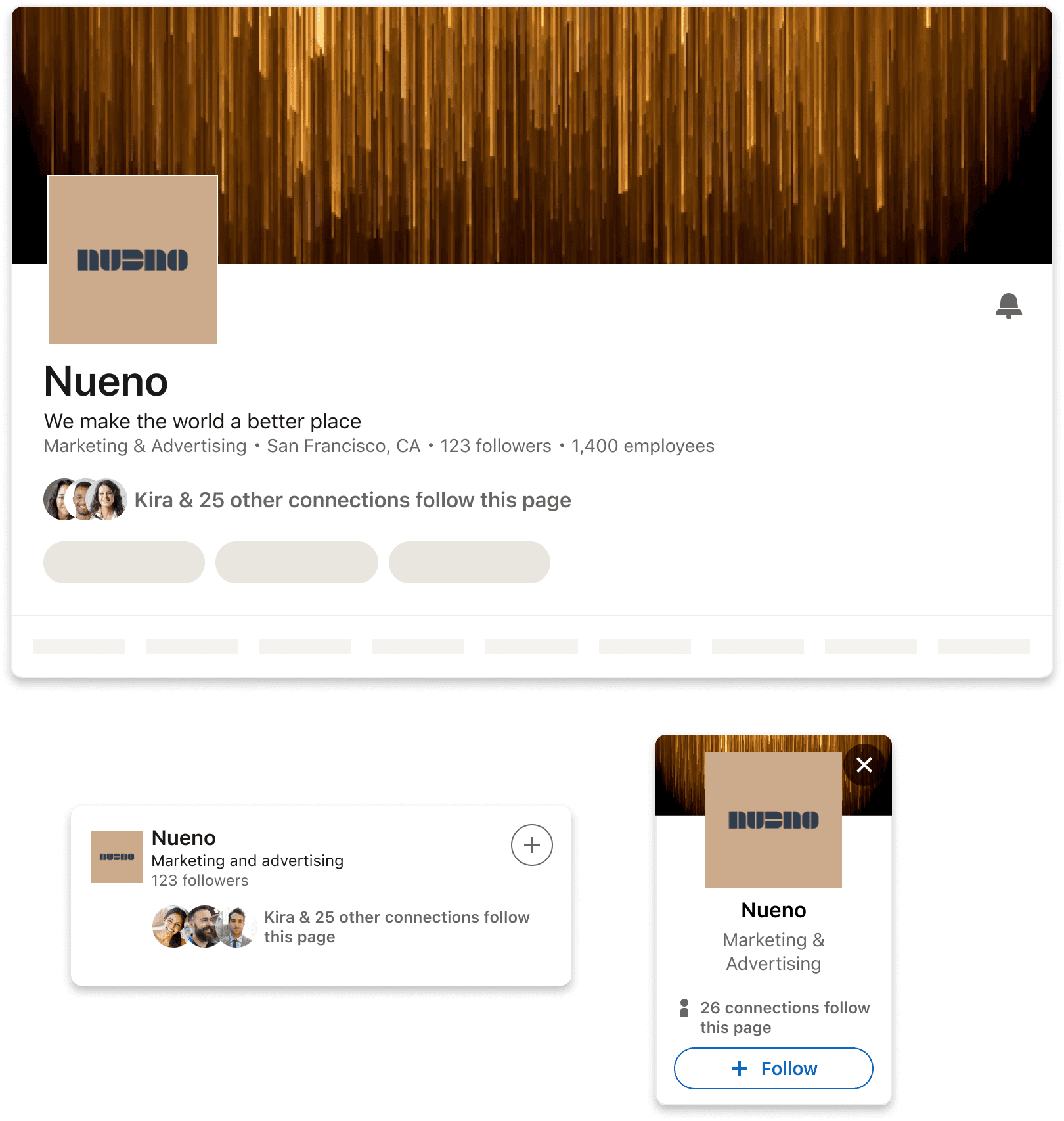
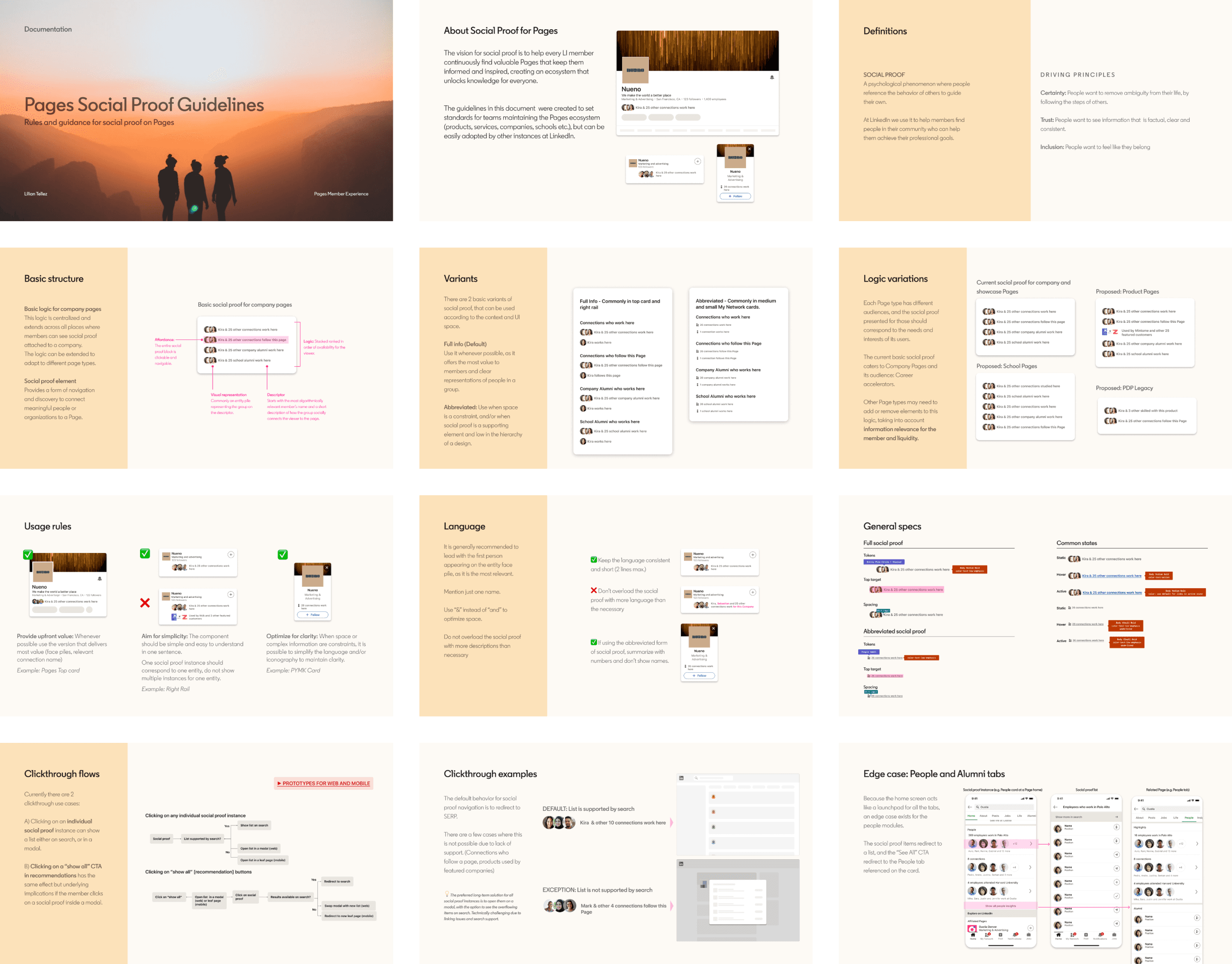
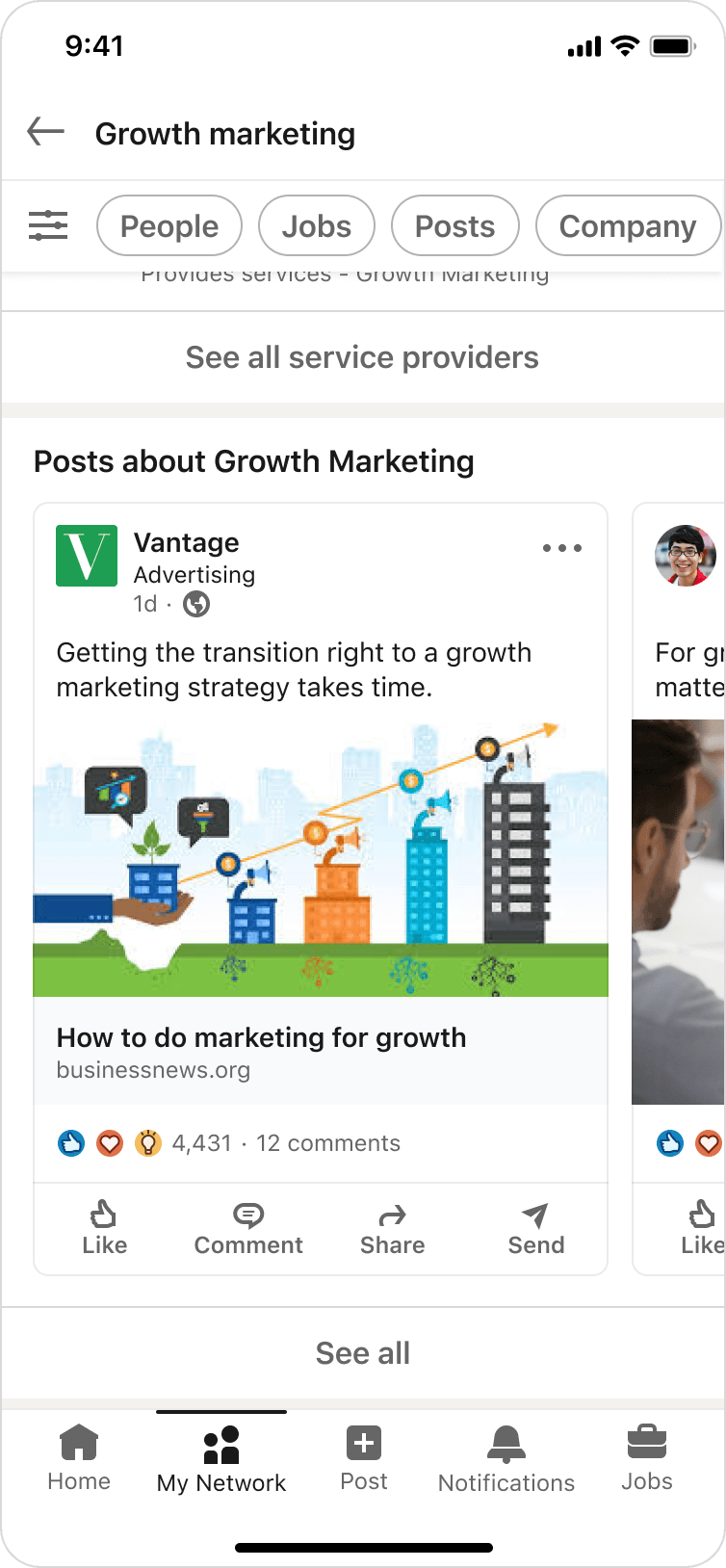
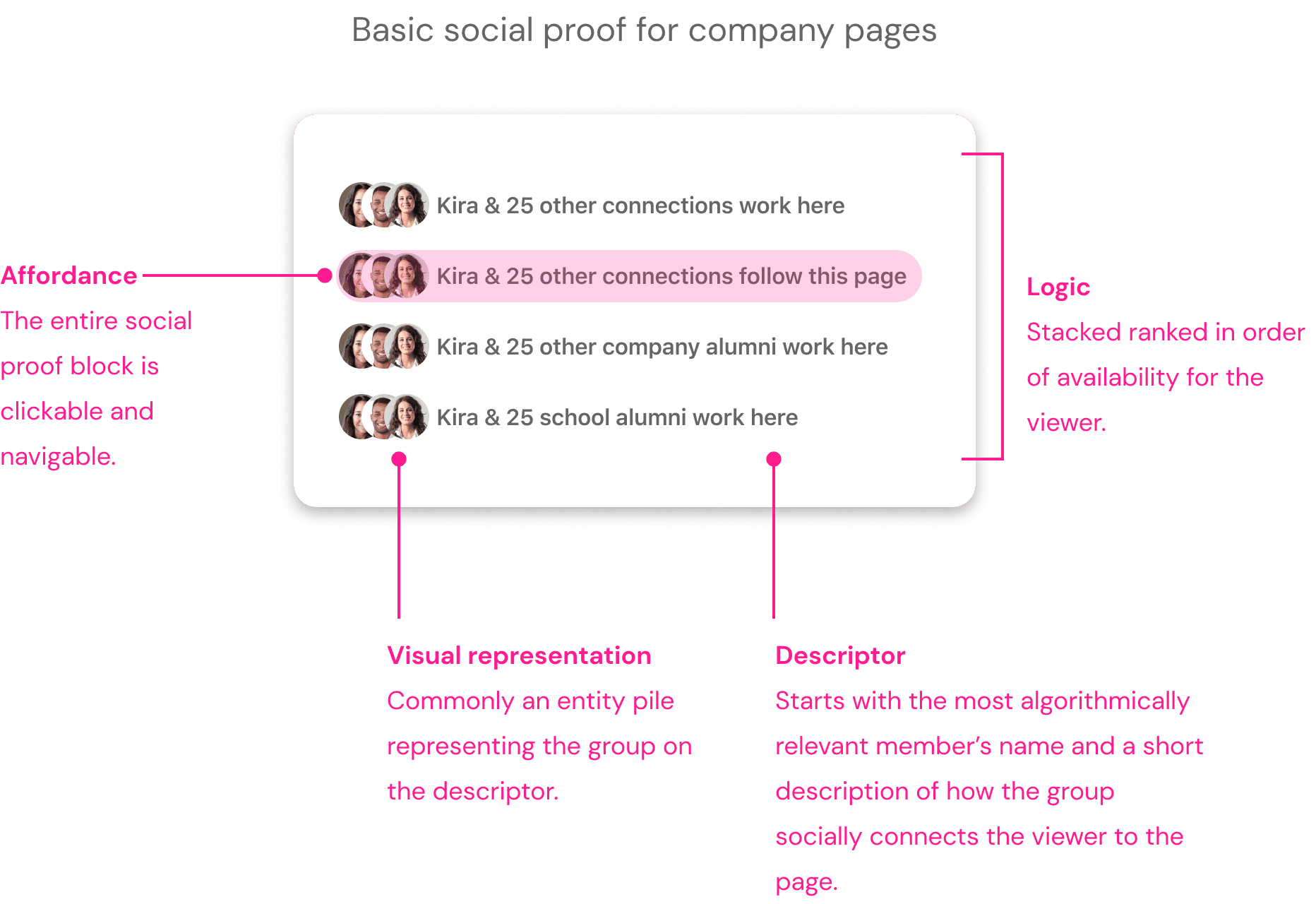
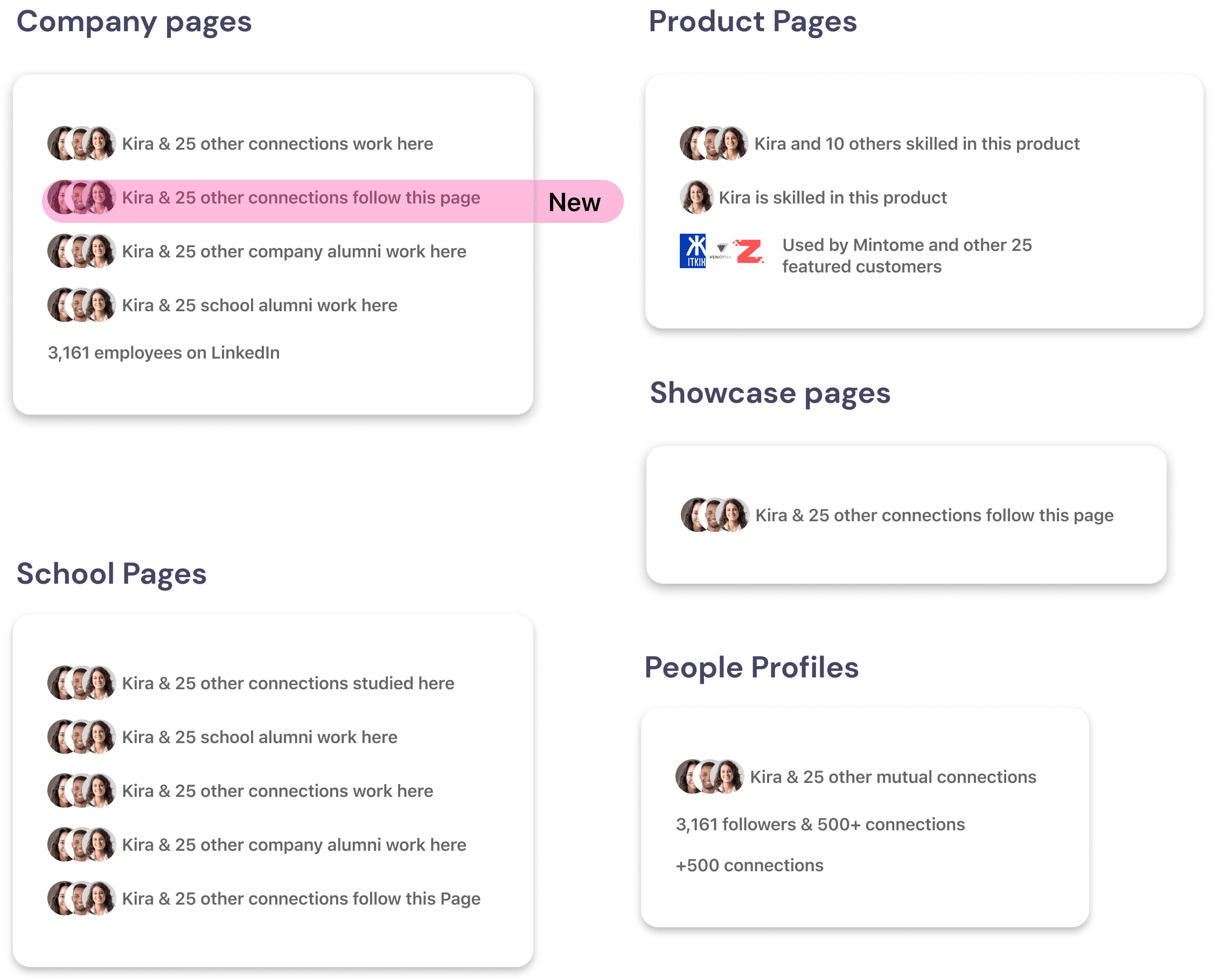
Socual proof on pages and recommendations


Guidelines


Increase engagement and visibility
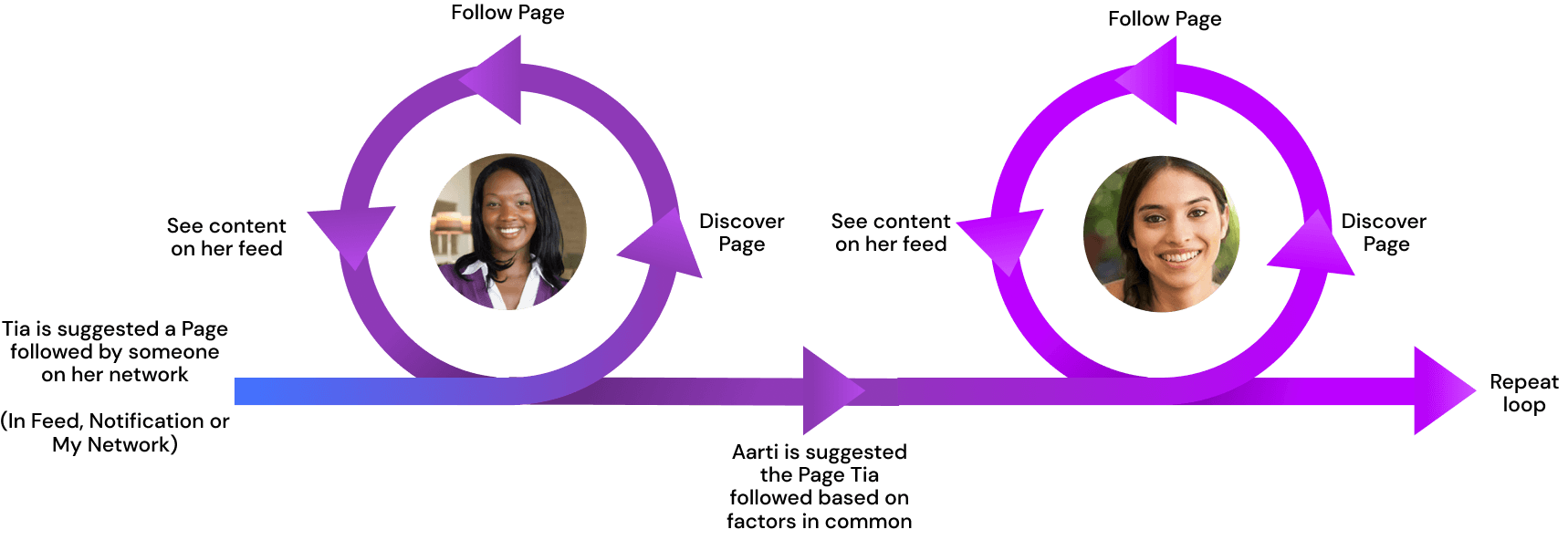
Follow loops
These were used to enhance the effectiveness of follows, with actions such as suggesting followed creators to a user's network and piggybacking on connection flows. They also improved content distribution by incorporating follow affinity scores.
How loops work:
Members A and B are connected. Member A follows a company, triggering a loop for members B, C, D… in their network - which in turn will trigger the loop back for member A.
Let's imagine two professionals at LinkedIn. Tia and Aarti, who are ex-coworkers, interested in growth marketing, with the same roles and a company in common. What Tia follows will trigger certain recommendations for Aarti, being the person in her circle with more affinities.


Learning about notifications
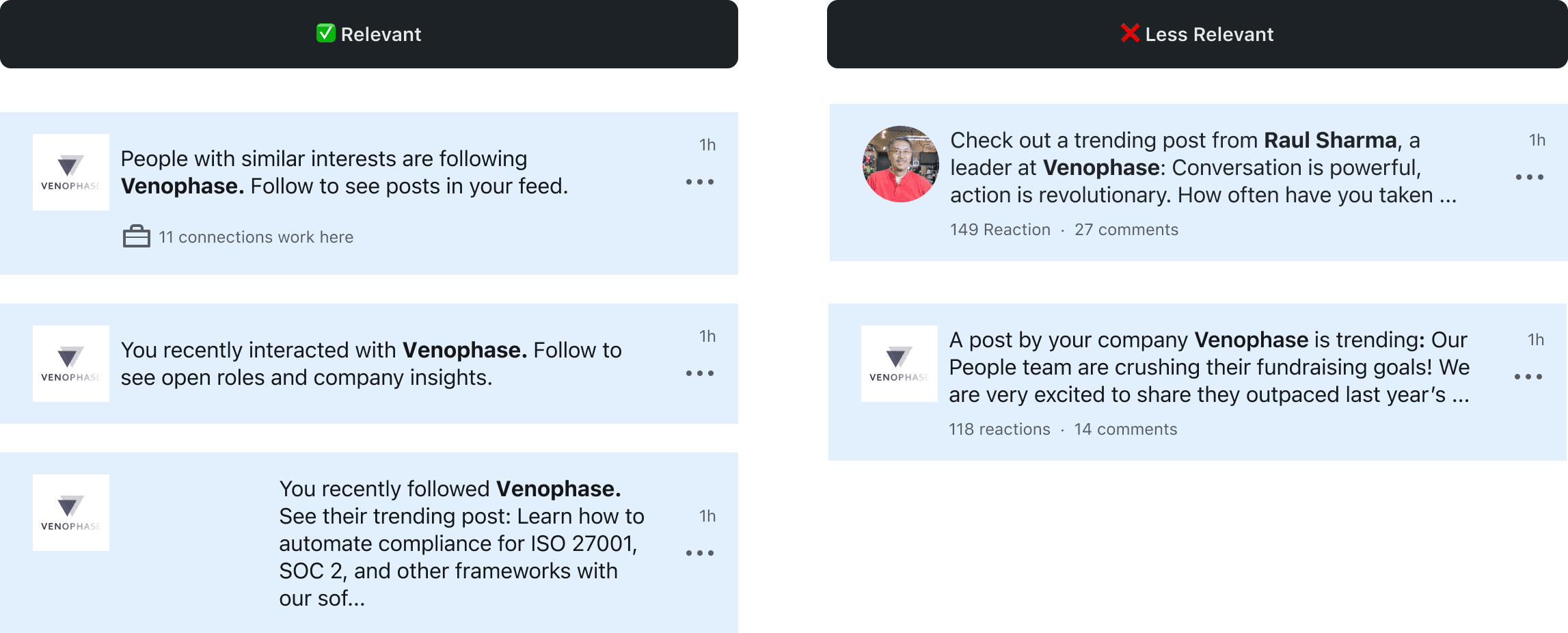
A way to keep companies present in people’s minds is through notifications.
The closer the notification was to the Member’s direct interests, interactions and connections, the better was at driving engagement.
Company leadership and employer notifications failed. The concept of “coworker” and “leader” can be uncertain and their posts can be often too personal to be relevant.


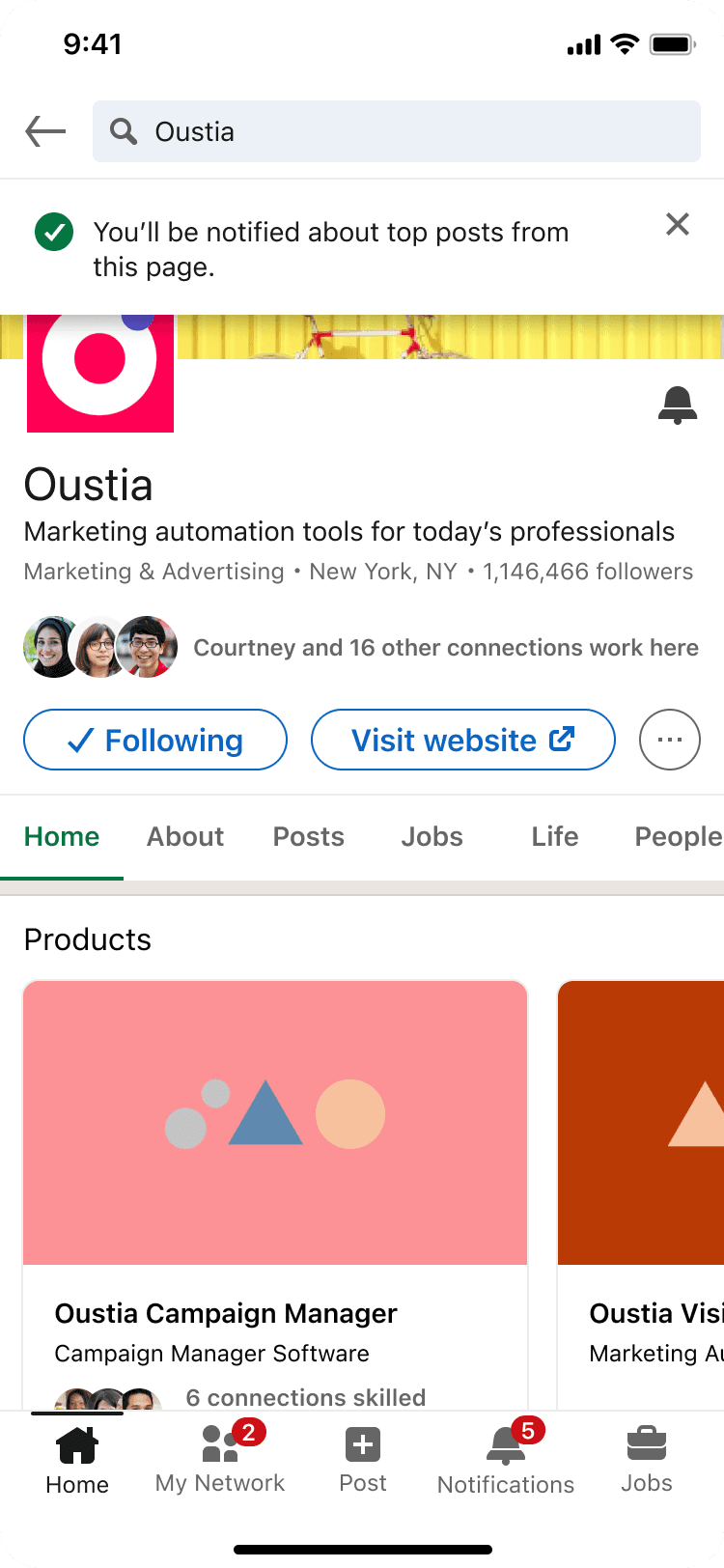
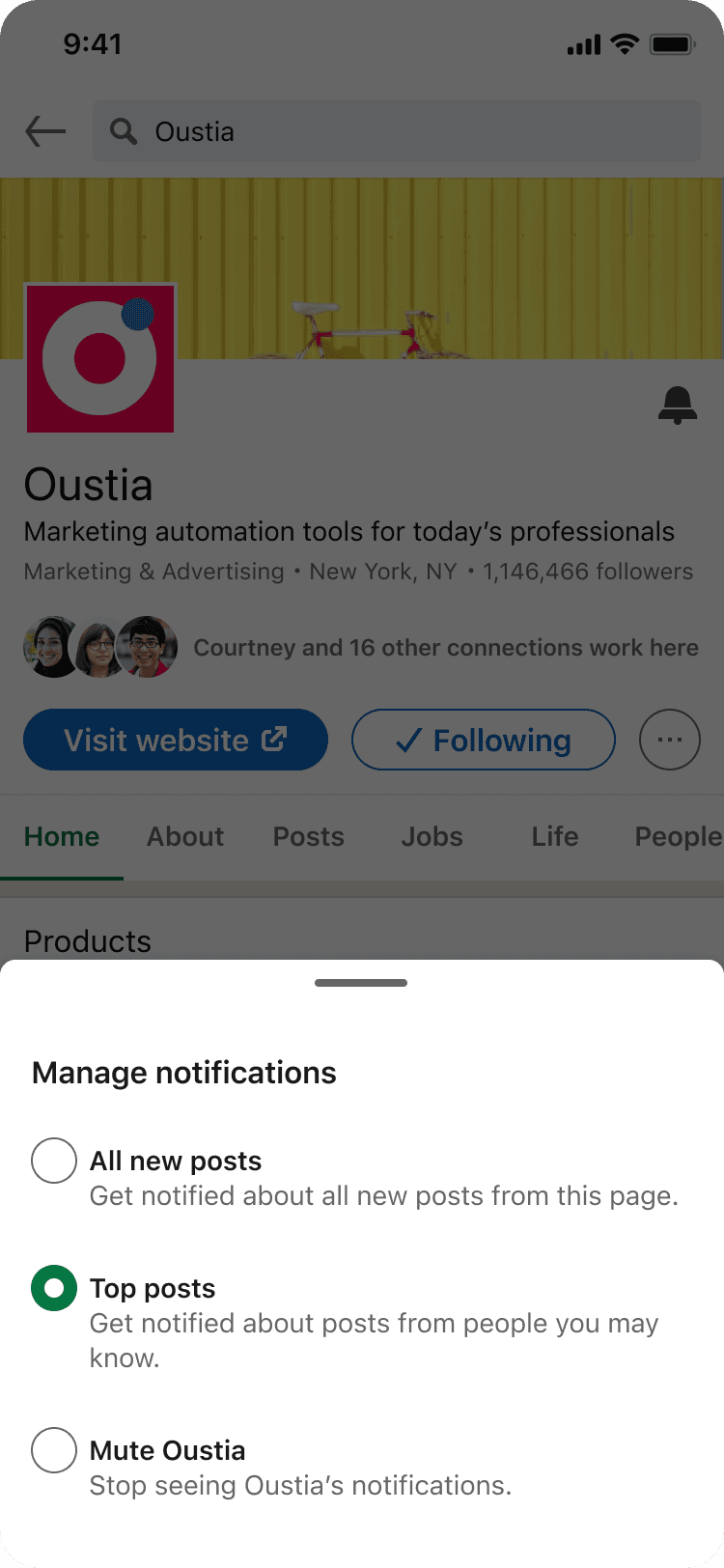
Subscription to notifications
Hypotehesis
Members want to receive content from Pages they follow, but rely solely on browsing their feed.
Action
Enabled subscription to top posts, delivering notifications and email digests to subscribed members
Impact
Average of 12,000 monthly subscriptions and increased content engagement.
Discovery carousel triggered by a follow


Discovery carousel triggered by a follow


Democratize companies' presence at LinkedIn
Hypotehesis
If members see pages present in their searches and visits for organic discovery, tied to topics they care about, they will be likely to show curiosity for companies and follow.
Action
Worked with multiple teams like search and editorial to add pages to their results and streams.
Impact
Visibility across different touch points increased follows in 4%
Newsletters


Search


My Network


Final thoughts
I focused on driving growth for Pages by transitioning from outputs (features) to outcomes (growth and key performance indicators), which is a hard transition to make as a designer.
Instead of working on single, big wins, I focused on achieving multiple small wins through a series of experiments and experience improvements. By focusing on growing new followers, I was able to drive growth and improve KPIs for the Pages product.