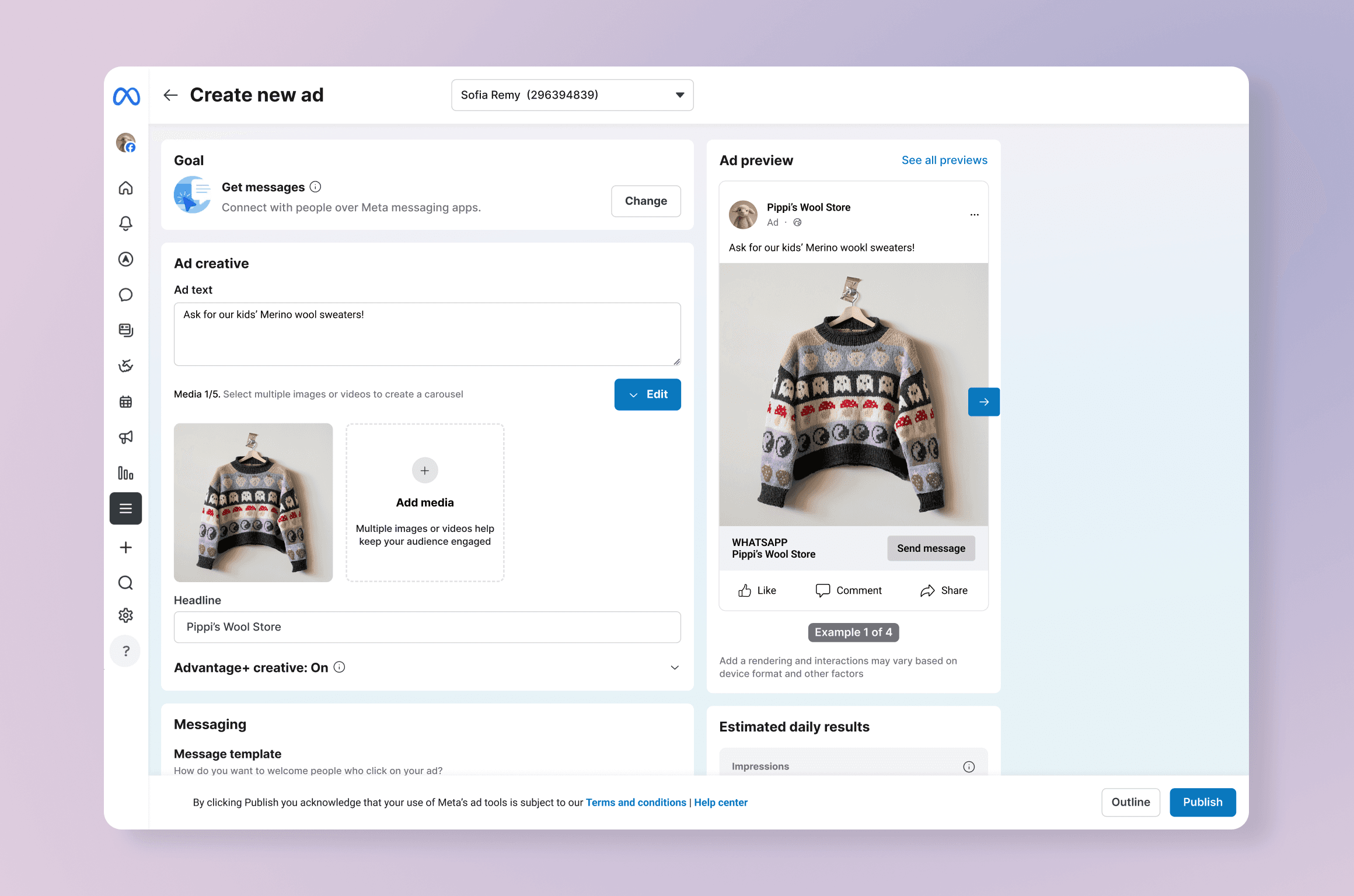
Brought WhatsApp ads to small business ad creation
Designed the ad creation experience that allows advertisers to publish ads on WhatsApp, and receive messages from prospective clients, and influenced outcomes across 4 ad products.
Adding WhatsApp to ad creation was a feature people requested. While building it, it turned into a multi-team, multi-region coordination problem that would produce an incoherent experience if nobody held the design direction together across it.
I led product strategy and end-to-end design across web and mobile, setting the direction teams could execute consistently — while navigating legal sign-off across US, EU, UK, and LATAM simultaneously.
Outcome: Coherent launch across 4 surfaces. Ads on WhatsApp delivered significantly better cost-per-message than comparable surfaces.
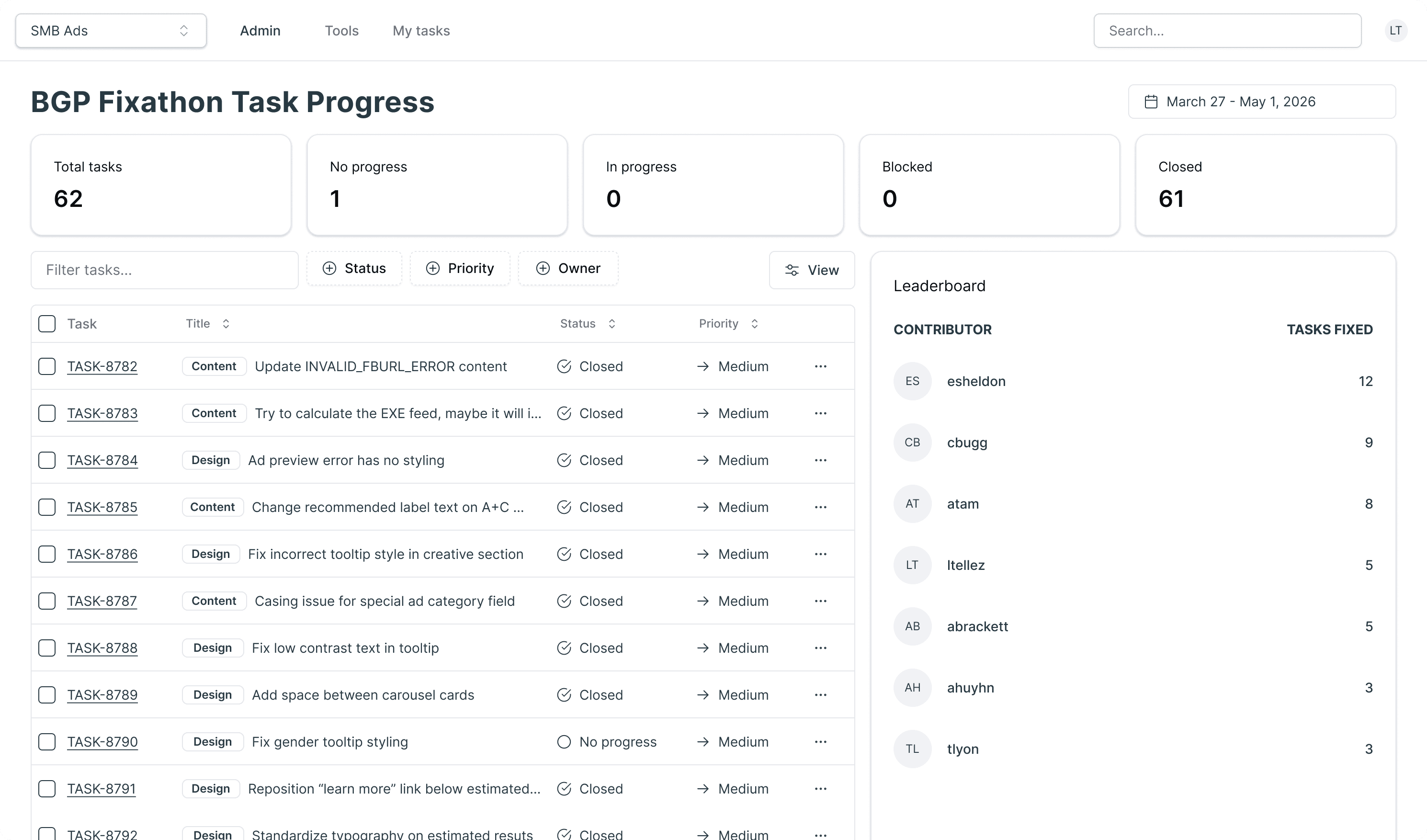
Built an AI-powered program to help designers take fixes in
their own hands
their own hands
Set up the foundations for designers to address usability issues directly in code, closing the gap between design intent and what actually ships.
Our team had a long backlog of small UI and accessibility bugs: Death by a thousand cuts, done quietly by implementations that shipped fast but missed the quality bar and accumulated over time.
I built the workflow, and process for designers to triage, fix, and validate issues directly in code using Meta AI proprietary tools. Piloted with 6 designers who resolved ~60 bugs in a single week, and graduated the process to a program.
Outcome:The program was adopted across the Ads org. Designers now ship their own quality fixes. The craft bar goes up permanently without adding to engineering load.
Envisioned a simplified way to select ad objectives
Created a vision for selecting objectives that match advertisers' mental models.
Advertisers starting to create an ad could see up to 32 visible objectives at the very first step. The real issue was lack of governance: Teams shipping objectives independently with no shared standard for how they were created or organized.
I designed an experience aligned to advertiser mental models and paired it with a governance model for how objectives get created going forward. The design was the artifact. The governance model was the actual contribution.
Outcome: A scalable framework giving teams guardrails for controlled growth, and advertisers a consistent experience across surfaces.
Final thoughts
Whether it's a new placement, a simplified flow, or a program that raises the craft bar across an org — the shape of the work is always the same: find the real problem, set a clear standard, and build the foundations that let teams move together without losing quality.
Meta operates at a scale where individual design decisions affect tens of millions of people and dozens of teams simultaneously. That environment sharpened how I think about governance, quality, and what it means to lead — not just contribute.
I'm looking for a Staff or Principal role where that kind of thinking is valued, in a product that matters to the people using it.